Fashion
Quince brings £50 cashmere to Britain
The $10.1 billion American basics brand launched online in the U.K. on Oct. 19, its first market outside North America, with no stores planned.

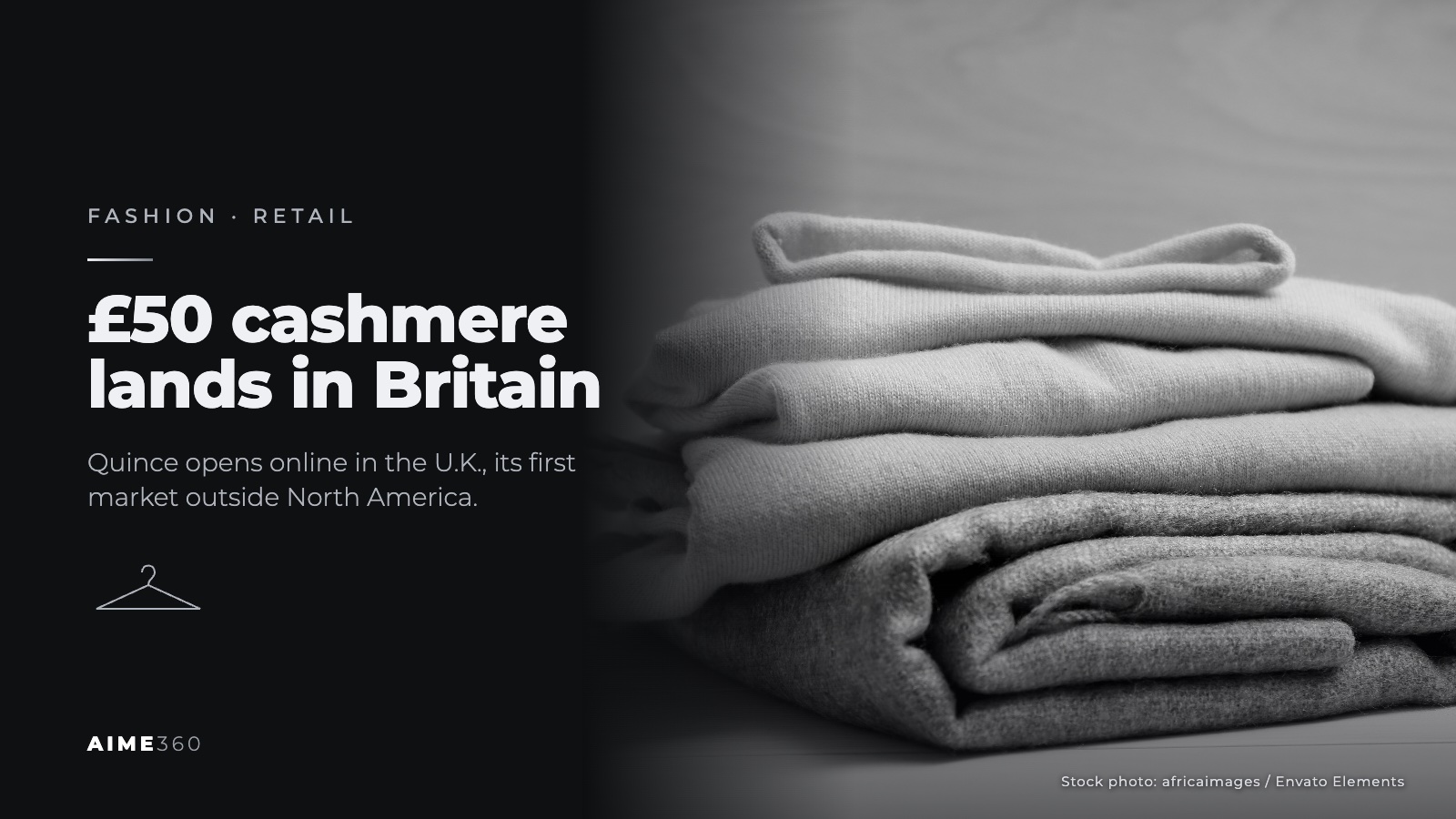
A £50 cashmere jumper sounds like a mistake on a price tag. For Quince, the American brand built on selling luxury-looking basics for a fraction of designer prices, it’s the business model. On Monday, that model arrived in Britain.
Quince launched online in the U.K. on Oct. 19, its first market outside North America, selling womenswear, menswear, children’s clothes and homeware, Drapers reported. Its U.K. site offers Mongolian cashmere jumpers at £50, silk blouses at £55 and leather handbags from £95, according to Retail Gazette.
Cutting out the middle
Quince’s pitch is simple: it says it skips intermediaries and sells directly from manufacturers, and claims its prices are 50% to 70% below comparable products, according to FashionNetwork. Those savings figures are the company’s own claims and haven’t been independently verified.
The brand will start with a narrower selection in Britain. Its head of international said Quince is “tailoring our categories for UK shoppers, starting with a tighter selection that will expand quickly,” according to the coverage. There are no physical stores planned, and the company intends to open offices in Madrid, Berlin and London as part of a wider European push, according to Modaes.
A $10 billion dupe machine
The money behind the expansion is serious. In March, Quince raised $500 million in a round led by ICONIQ Capital, more than doubling its valuation to $10.1 billion, according to Retail Gazette, which described Quince as a “dupe” retailer. eMarketer framed the move as a sign that “dupe culture” has gone mainstream.
A dupe is a cheaper product that looks or feels like a more expensive one. For years, dupes were a slightly embarrassing secret. Now shoppers brag about them on social media, and brands like Quince build entire businesses on the comparison.
Read the label
Read the clothes as signals and Quince’s success says a lot about how people think about luxury now. Many shoppers no longer want a logo. They want the material: real cashmere, real silk, real leather. If they can get that for a fraction of the price, the designer name starts to look like an expensive extra.
That’s a threat to traditional luxury houses, which rely on the idea that their products are worth far more than their materials. It’s also a threat to British high-street retailers, who now face a well-funded American rival selling premium fabrics at mid-market prices.
The questions behind the price
Cheap cashmere raises obvious questions. Cashmere comes from goats, and the pressure to produce more of it cheaply has been linked by environmental groups to overgrazing in Mongolia’s grasslands. Very low prices for any premium material invite scrutiny of how it was sourced and who made the garment, and at what wage.
Quince says its direct model is what makes the prices possible, not cutting corners. Shoppers who care about the difference will want to see the evidence, from supply chain information to independent audits. The launch coverage reviewed for this story focused on prices, not on that kind of detail.
Why Britain first
Britain is a logical first stop outside North America. It shares a language with Quince’s home market, has one of Europe’s biggest online shopping cultures and a large, price-conscious middle class. It’s also a market where American brands can test European tastes before moving into countries with different languages, sizing conventions and return habits. The planned offices in Madrid and Berlin suggest the U.K. is the opening move, not the destination.
From the shopper’s screen
For a British shopper, the appeal is easy to see. A £50 cashmere jumper is cheaper than many high-street wool blends. If the quality holds up, Quince will find customers quickly, especially in a country where the cost of living has squeezed clothing budgets.
The risks for shoppers are the usual ones for an online-only brand from abroad: returns, sizing and whether the product in the box matches the one in the photo. A tighter launch range, as Quince described, may be a way to get those basics right before expanding.
What it means for the high street
British retail has spent years losing ground to online rivals and fast-fashion giants. Quince adds a different kind of competitor: not the cheapest clothes, but the cheapest premium clothes. Department stores and mid-market brands that sell cashmere and leather at much higher prices may feel the pressure first.
Quince is betting that British shoppers, like American ones, care more about what a jumper is made of than whose name is sewn inside it. The first winter will show whether that’s true.
Sources
- Drapers: Quince pushes ahead with UK launch
- Retail Gazette: $10bn US “dupe” retailer Quince launches in UK
- FashionNetwork: Quince launches UK platform
- Modaes: Quince expands European footprint
- eMarketer: Quince expands as dupe culture becomes normalized
- The Business of Fashion: Quince launches in UK