
Business
Brent crude tops $110 as tanker attacks choke the Strait of Hormuz
Only four ships crossed the strait on Oct. 18, one tracker says, against about 85 on a normal day. The price lands on every driver and airline.

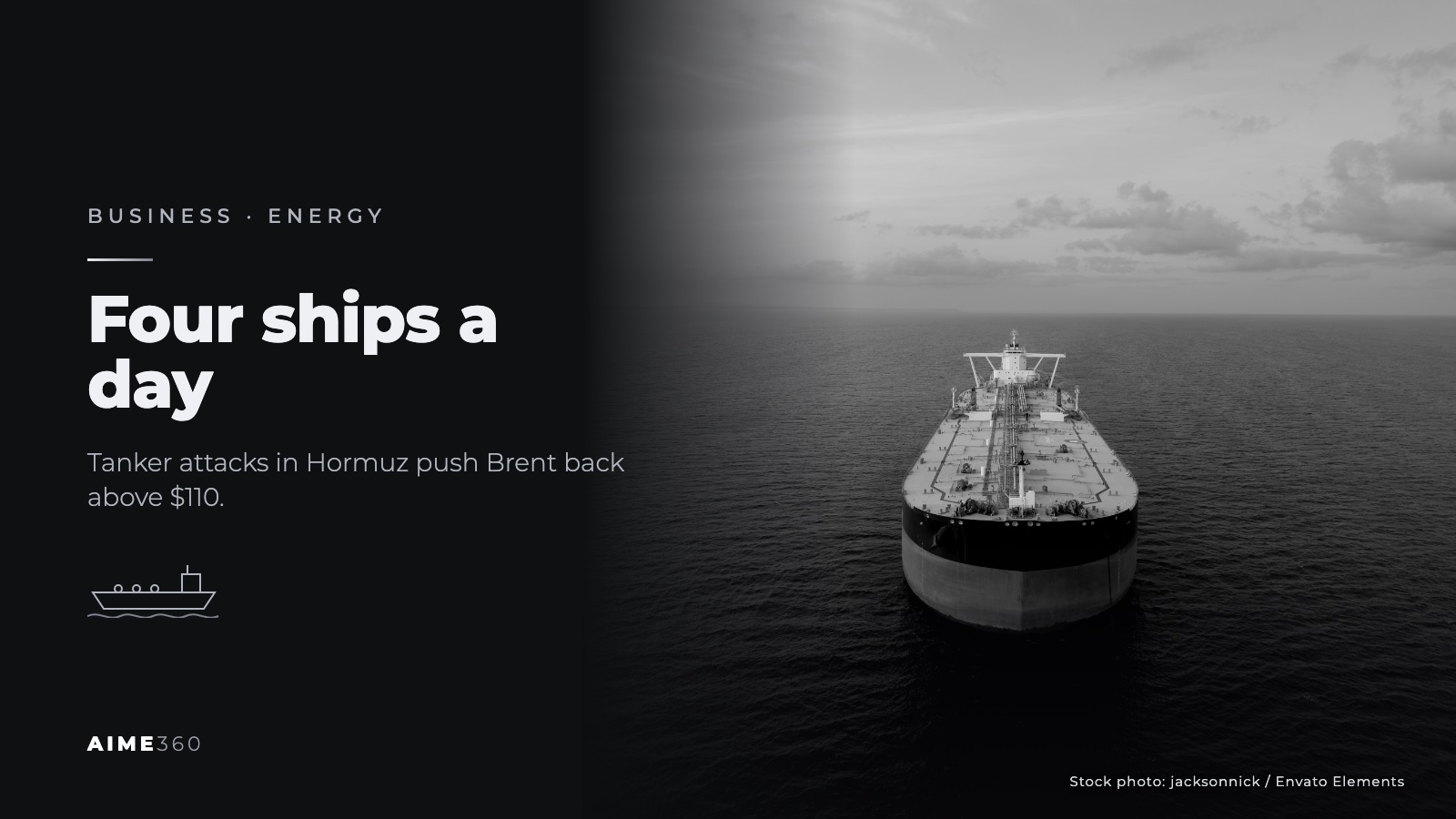
Day 234. That’s how one shipping tracker now counts the crisis in the Strait of Hormuz, the narrow channel that carries a large share of the world’s oil out of the Persian Gulf. This week the count came with a price tag: Brent crude back above $110 a barrel.
Brent briefly topped $110 on Monday, Oct. 19, as reports of intensive tanker attacks in the strait severely disrupted oil flows, OilPrice.com reported, citing data from the analytics firm Kpler. U.S. crude, WTI, traded near $98.55 at the time of that report.
Ships that don’t move
The physical numbers are stark. Only four ships transited the strait on Oct. 18, compared with roughly 85 on a normal day, according to IMF PortWatch data cited by the tracker straits.live. Attacks on shipping in the area have surged to a record high, NBC News reported, as Iran escalates strikes with little U.S. response.
Earlier this month, the picture looked briefly better. Exports through the strait had been rebounding, but CNBC reported on Oct. 6 that those flows were vulnerable to stepped-up Iranian tanker attacks. Al Jazeera asked the same question that week: whether increased exports were sustainable. Kpler had said exports recovered, then reversed that view, according to OilPrice.com.
Follow the barrel
When oil moves through Hormuz, it moves to refineries in Asia, Europe and beyond, then into gasoline, diesel, jet fuel and plastics. When it doesn’t, buyers bid up whatever barrels they can get elsewhere, and the price rises for everyone, including countries that buy none of their oil from the Gulf.
That’s why a tanker attack thousands of miles away shows up at an American gas pump. Oil is priced globally. A shortage in one place is a price increase everywhere.
It also explains a story AIME 360 covered this week: United Airlines cutting its 2026 profit outlook as jet fuel climbs. Airlines, truckers, farmers and delivery companies all live and die by fuel costs, and each of them has to decide whether to absorb higher prices or pass them on.
Still below the spring peak
There’s some perspective in the numbers. Brent hit a 52-week high of about $118 at the end of March, according to market tracking data, and the October trading range has run from roughly $100 to just under $110. Prices are painful, but they’re not at the year’s worst.
They are, however, far above where they were a year ago. Brent traded near $59 last December, according to the same data. Nearly doubling in less than a year is the kind of move that rewrites business plans and household budgets alike.
From the pump
For a driver filling up, $110 oil means paying more at the station, sometimes within days of a spike. For a family heating a home this winter, it means higher bills. For a small business that delivers anything, it means either raising prices or earning less.
For governments, high oil prices are a political problem. NBC News connected the attacks and their effect on oil prices to the U.S. midterm elections, where the cost of living tends to decide votes. That gives Washington a reason to want calm in the Gulf, and gives Tehran a pressure point.
Who wins at $110
Not everyone loses. Oil producers outside the Gulf, from American shale drillers to exporters in the North Sea and West Africa, earn more on every barrel they can ship while Hormuz is choked. Tanker owners willing to take the risk can charge more. Energy stocks tend to rise when everything else wobbles.
That’s the uncomfortable math of an oil shock. The cost lands on consumers and fuel-hungry businesses, while a smaller group of producers collects the windfall. Governments facing angry voters often end up arguing about which side of that ledger they’re on.
What the market can’t price
The hardest thing for traders to price is duration. A disruption that ends in a week is a blip. One that runs for months is a structural shock. After 234 days of crisis by one count, the market is still trying to guess which this is.
Data on the strait also comes from a patchwork of trackers, analytics firms and news reports, and the figures don’t always agree. Daily price reports differ depending on the time of day and whether they cite futures or settlement prices. What’s consistent is the direction: fewer ships, more attacks and more expensive oil.
The strait is only about 21 miles wide at its narrowest point. This week, it was wide enough for just four ships, and for a price that every driver, airline and refinery on Earth will feel.
Sources
- OilPrice.com: Brent tops $110 as tanker attacks threaten Persian Gulf supply
- NBC News: Hormuz ship attacks hit record high
- CNBC: rebounding Hormuz exports vulnerable to tanker attacks
- Al Jazeera: Hormuz ship attacks surge
- straits.live: Strait of Hormuz transit tracker (IMF PortWatch data)
- Brent crude price history tracker