Politics
Interview with a Baloch separatist
A Baloch separatist says Iran was invented in 1935 and its history is a lie. I checked his claims against the record. Some hold up. Many don’t.
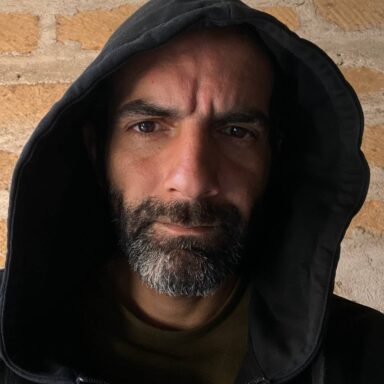
By the time I closed the room it was 12:30 a.m. where I was, and he had done most of the talking.
“I don’t give a shit what you called it within your own community,” the Baloch separatist said. He meant Iran: the name, the country, the whole idea. “Iran was created by Reza Pahlavi in 1935. Period. That’s all I know, and that’s a fact.”
He said it in a live audio room, the kind of conversation that swings from ancient empires to Gulf monarchies to an apology for cursing in about four minutes. I hosted the room and asked most of the questions. He talks about the Baloch armed campaign as “we.” I couldn’t confirm whether he belongs to any group, so I’m not using his name.
Why I took the call
This story started with a request. Baloch activists reached out to me and asked for exposure. Their movement, they told me, has never gotten traction.
So I decided to find out what they actually want.
A request like that is a reason to listen. It’s also a reason to be careful. A movement asking for a megaphone is asking for something, and the honest thing to give it is a hearing and a fact check, in that order. His words are quoted below as he said them. Every piece of history he offered got checked.
This isn’t a seminar argument. Since the U.S.-Israeli war on Iran began on Feb. 28, Baloch armed groups have pushed harder against a weakened state, according to an analysis in Modern Diplomacy. The rights group HRANA counted at least 63 armed incidents in Sistan and Baloochistan and neighboring Kerman province between March 31 and Oct. 10, with at least 94 people dead, per Human Rights Activists in Iran. The history he tells is the story the fighters tell about why they fight. So I checked it.
A memo, not a birth certificate
Start with 1935. Something did happen that year. Reza Shah asked foreign governments to stop saying “Persia” and use “Iran,” and the request took effect on March 21, 1935, according to the UK National Archives.
That was a change of address, not a birth. Around 262 CE, the Sasanian king Shapur I had himself carved into stone as ruler of Ērānšahr, the land of the Iranians, in his inscription at the Ka’ba-ye Zartosht. The name is about 1,700 years older than the memo.
On the border, though, he has a point. He said the British drew the line through Baloochistan. In 1871, British Maj. Gen. Frederic Goldsmid settled the Persia-Kalat frontier, and the Shah accepted the line while asking to keep the small district of Kohuk, according to India Office files digitized by the Qatar Digital Library. The same files say Goldsmid’s evidence came mostly from the Persian side. The Azeri go-between and the deal with the queen that he described don’t appear in anything I found.
The conquest he dates to 1935 came earlier. Reza Shah’s army defeated the Baloch ruler Dost Mohammad Khan in 1928 and took Bampur, British Persian Gulf administration reports record. That’s close enough for his anger to be real, and wrong enough to matter in print.
The map below lays his claim over the lines that actually appear in the archives. Switch between sources to see who drew what.
Interactive map
Whose map? Baloochistan, Iran and the lines drawn through them
Pick a source to see what it shows. Click any shape or dot for the claim and what the record says.
Shapes are drawn on today’s province lines (geoBoundaries / OpenStreetMap, ODbL; countries from Natural Earth) because he offered no map of his own. “Persian Gulf” is the name in international use; Gulf Arab states call it the “Arabian Gulf.” The 1871 and 1896 lines are traced along today’s Iran-Pakistan border, which follows them with later adjustments. Town locations are approximate.
The arrow points backward
When the history got thin, I asked whether any of it had citations or was knowledge passed down. Nobody in the room produced one.
Take his claim that the Persians came from Gujarat, India. The record runs the other way. The Parsis are Zoroastrians who migrated from Iran to Gujarat between roughly the eighth and 10th centuries, as Encyclopaedia Iranica documents. He had the arrow pointing backward.
That pattern kept repeating. He said Hormoz is a Balochi word meaning “bring together.” The most widely held explanation traces it to Hormizd, the Middle Persian name of the Zoroastrian god Ahura Mazda, though scholars float alternatives. He said the first Pahlavi renamed Kermanshah. The documented rename came after 1979, when the Islamic Republic called it Bakhtaran, before quietly giving the old name back in the early 1990s, according to Encyclopaedia Iranica.
He also got some renames right. Arabistan really did become Khuzestan under Reza Shah, and the Arab port of Mohammerah became Khorramshahr, as Arab News has reported.
Then he told us Molavi Abdolhamid, the most prominent Sunni cleric in Iran, isn’t Baloch at all. “He is an Arab, uh, from Ahwaz,” he said. Abdolhamid was born in 1947 in Galugah, a village near Zahedan, and his surname reflects the Baloch Zahi clan, according to IranWire.
Who he talks down to
The facts were shaky. The contempt was steady.
On Gulf states: “Oman is a puppet of Iran, so they won’t really budge. Qatar is inbred, so I don’t know about those people.”
On the Hazara Shia fighters he blames for running Sistan: “The, the fucking Mongolian-looking ones.” Later, listing the peoples of Baloochistan, he added “these motherfucker Hazaras also.” On someone he couldn’t name: “Some, some shit Khan,” followed by a theory that Mazandaran is full of Khans “because they’re Mongols.”
On the country itself: “It’s a Twelver Shia piece of shit.”
On how tolerant he is, by comparison: “Most Baluch you will not find, they will fucking put a knife on your neck and throw you in the garbage. I’m very lenient.”
He aimed some of it at me. “The only reason I get upset with you is when you’re fed wrong information, and you spew it out.”
His claim that Sistan is controlled by about 5,000 Fatemiyoun fighters has nothing behind it that I could find. Sistan’s people are mostly Sistanis, a Persian-speaking Shia minority in the province, per Britannica.
In the same conversation he said, “I don’t see Iranian general public as our enemy, even though some of them are radical Twelvers.” The contempt for the faith is his, not ours. Millions of people share it, and most of them never joined the IRGC.
Where the record backs him
He was right about the blood. On Sept. 30, 2022, security forces opened fire on worshippers and protesters in Zahedan. Amnesty International named 66 people killed that day and 82 in the city overall and said the true toll was likely higher. His figure, 392, is far above any count I found. “That general we killed” fits Col. Ali Mousavi, the IRGC intelligence chief for the province, who was shot dead that day, Al Arabiya reported. Nothing I found says Mousavi gave the order to fire.
He was right that the fight has spread. Baloch militants have claimed attacks in Kerman province, RFE/RL reports. He was also right about the 8 p.m. protests: Reza Pahlavi did call Iranians to chant at 8 p.m. in January, and the internet went dark as the crackdown began, Euronews reported. His suggestion that Pahlavi “tipped” the IRGC has no evidence behind it. Calling Pahlavi “option B of the IRGC” is opinion, and he offered no proof. A Reuters feature republished by The Express Tribune describes a Pahlavi campaign losing steam, not a secret deal.
The poll I raised with him checks out too. GAMAAN’s June 2024 survey found about 10% national support for a federal republic, with the strongest support for decentralization in Kordestan, West Azarbaijan and Sistan and Baloochistan, according to GAMAAN’s report.
His claims that Baloch fighters now carry American Stingers and M16s, and that the MEK and Pahlavi camps came to him and were turned down, came with no proof. This story does not include a response from the Iranian government.
The line he wants erased
He wanted a period after 1935. The record puts it somewhere else: in 1871, in a British general’s report on a line through Baloochistan, built mostly on evidence from the Persian side.
Fact check: what he said vs. what the record shows
| Claim | Verdict | What the record shows |
|---|---|---|
| Iran was created in 1935; the name didn’t exist before | False | 1935 was a request for foreigners to use “Iran.” Shapur I used Ērānšahr around 262 CE. |
| The British drew Iran’s border with Baloochistan | Partly true | Goldsmid’s 1871 Perso-Kalat line. No record of the queen deal or the Azeri go-between. |
| Baloochistan was occupied in 1935 | Wrong date | Reza Shah’s forces took Bampur in 1928. |
| The Khan of Kalat is alive in the UK | True | Mir Suleman Dawood Jan has lived in self-exile in the UK since 2006 (Dawn). |
| Kalat aided Saudi Arabia in 1933 | Unproven | No record found. |
| Persians (Fars) came from Gujarat | Backward | The Parsis migrated from Iran to Gujarat. |
| Hormoz means “bring together” in Balochi | Unsupported | The main theory is Hormizd (Ahura Mazda). |
| The first Pahlavi renamed Kermanshah | False | The rename to Bakhtaran came after 1979 and was reversed in the early 1990s. |
| Arabistan was renamed Khuzestan | True | Reza Shah, 1920s; Mohammerah became Khorramshahr. |
| Molavi Abdolhamid is an Arab from Ahvaz | False | Born near Zahedan, Baloch Zahi clan. |
| 392 killed on Bloody Friday | Inflated | Amnesty: 66 named that day, 82 in Zahedan. |
| Sistan is run by about 5,000 Fatemiyoun | Unsupported | Sistanis are a Persian-speaking Shia minority. |
| The Medes are Baloch and Kurdish ancestors | Contested | Kurdish descent from the Medes is a widely cited theory, not settled fact (ABC-CLIO). |
| The Zand dynasty was Kurdish | Partly true | The Zands were Laks, possibly of Kurdish origin (Iranica). No Baloch link found. |
| The Brahui are the real Elamites | Fringe | A minority linguistic proposal (Southworth and McAlpin) that most linguists consider unproven. |
| Baloch fighters moved into Kerman | True | Attacks claimed in Kerman province in 2026. |
| Baloch fighters carry American weapons | Unproven | No evidence found. |
| Federal support in the GAMAAN poll (my question) | True | About 10% federal republic nationally, highest in minority provinces. |
Sources
- UK National Archives blog: From Persia to Iran, via Inglistan: the 1935 request.
- UC Irvine Sasanika: Shapur I’s inscription at the Ka’ba-ye Zartosht: Ērānšahr in the third century.
- Qatar Digital Library: The Settlement of the Persia-Baluchistan Frontier: Goldsmid’s 1871 line (primary source).
- Qatar Digital Library: Persian Gulf Administration Reports 1926-1938: the 1928 Bampur campaign (primary source).
- Dawn: Khan of Kalat, king without a crown: the Khan’s exile.
- Encyclopaedia Iranica: Parsi communities, early history: the Parsi migration.
- Channel 8: Origin of Hormuz: Hormuz etymology.
- Brahui and the Zagrosian (journal article via vLex): the Brahui-Elamite proposal.
- Encyclopaedia Iranica: Kermanshah: the Bakhtaran rename.
- Arab News: How Iran’s Ahwazi Arabs fell victim to oppression: Arabistan and Mohammerah.
- IranWire: Molavi Abdolhamid Ismaeelzahi: the cleric’s background.
- Amnesty International: At least 82 Baluchi protesters and bystanders killed: the Bloody Friday toll.
- Al Arabiya: Senior IRGC commander killed in clashes: Col. Ali Mousavi.
- Britannica: Sistan: the region and its people.
- Modern Diplomacy: Iran’s Fraying Edge: the war and the insurgency (analysis).
- Human Rights Activists in Iran: Baloch rebels step up attacks: the HRANA incident count.
- RFE/RL: Sistan-Baluchistan insurgency: attacks in Kerman.
- Euronews: Mass protests erupt after exiled prince’s call: the 8 p.m. calls.
- The Express Tribune (Reuters): Inside Reza Pahlavi’s faltering bid: the state of Pahlavi’s campaign.
- GAMAAN: Iranians’ Political Preferences in 2024: the federalism poll.
- ABC-CLIO: the Kurdish-Median theory.
- Encyclopaedia Iranica: Zand dynasty: the Zands’ Lak origins.
- Qatar Digital Library: Perso-Baluchistan Frontier demarcation files: the 1896 Holdich line (primary source, map).
- Qatar Digital Library: Holdich in the Geographical Journal: the 1896 commission’s own account (map).
- Princeton University Library: Map of Eastern Persia, 1873: Goldsmid-era British map (map).
- Qatar Digital Library: Lovett’s map of Beluchistan and the Perso-Beluch boundary: boundary-commission map (map).
- Qatar Digital Library: Map of Western Baluchistan, 1874: India Office map (map).
- Qatar Digital Library: Lorimer, Gazetteer of the Persian Gulf, 1908: the districts of “Arabistan” (map).
- Tehran Times: Qajar era maps of Iran on show in Golestan Palace: Iranian state map exhibition (map).
- History News Network: Iran unveils historical maps: the 2004 Foreign Ministry exhibition (map).
- Magiran: The National Library and Archives of Iran and the Foreign Ministry Library: what Iran’s archive maps were studied for (map).
- Big Think: The phantom emirate of Al-Ahwaz: separatist “Al-Ahwaz” maps (map).
- Encyclopaedia Iranica: Baluchistan and Makran: the academic definition of the region (map).
- Map data: provinces from geoBoundaries (© OpenStreetMap contributors, ODbL), countries from Natural Earth, drawn with Leaflet.
Photos
- Featured image: rooftops of Yazd’s old town. Stock photo: studio88poland / Envato Elements, not taken during the events in this story.